Key Takeaways
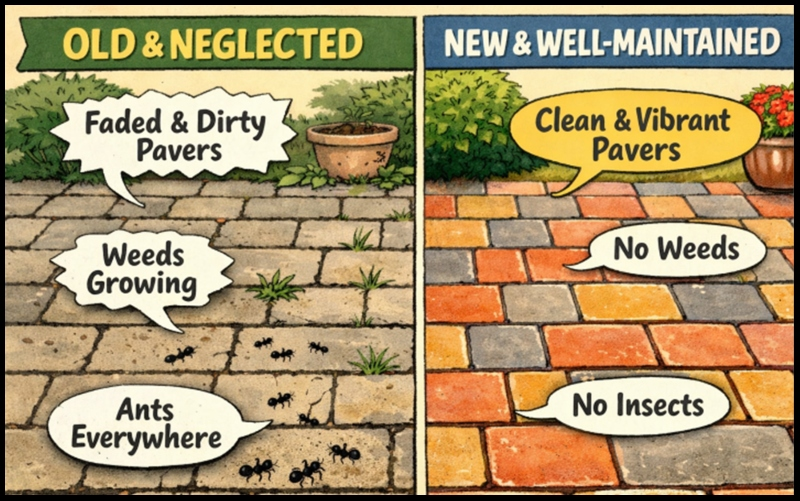
- Sealing outdoor pavers is essential for protecting them from environmental damage, not just enhancing their appearance.
- Unsealed pavers are highly vulnerable to color fading, staining, mold growth, and deterioration from sun exposure and moisture.
- Weed growth and insect activity can disrupt paver stability when joints are left unprotected.
- Water infiltration can lead to erosion, shifting, and structural damage over time.
- Sealed pavers require less maintenance, saving time and money on cleaning and repairs.
Outdoor pavers offer a beautiful and practical solution for patios, walkways, and driveways throughout your property. Whether you have brick, concrete, or natural stone pavers, their visual appeal and versatility make them a popular choice. However, many homeowners underestimate the importance of proper maintenance, especially sealing. Failing to seal your pavers opens the door to a range of costly and inconvenient issues. If you’re considering skipping this step, here’s what you need to know. For those searching for paver sealing near me, understanding the risks of neglect can help ensure lasting curb appeal.
Sealing is about more than just aesthetics. It is a crucial barrier that shields your hardscape investment from Florida’s harsh sun, heavy rains, and regular wear. Without sealant, pavers are vulnerable to fading, staining, weed growth, and even structural degradation.
Color Fading and UV Damage
One of the most noticeable drawbacks of leaving pavers unsealed is rapid color fading from exposure to ultraviolet rays. Over time, sunlight can strip paver materials of their vibrancy, causing colors to fade and take on a dull appearance. This is particularly true in climates with intense, persistent sunlight. A quality sealer acts as a sunscreen for your surfaces, protecting the pigments from UV damage and preserving the fresh, rich hues that drew you to your pavers in the first place.
Increased Staining and Mold Growth
Pavers are inherently porous, meaning they can easily absorb water, oils, and other contaminants. When left unsealed, all manner of spills from barbecue grease to dropped drinks can leave stubborn stains that mar the surface. Compounding the issue, Florida’s humidity fosters quick mold and mildew development. This not only makes your walkways slippery and less safe but also impacts the visual quality of your outdoor area. Sealing minimizes absorption and acts as a protective shield against both stains and unsightly biological growth.
Weed Growth and Insect Infestation
The joints between pavers are prime spots for weeds to take root, especially when rain carries seeds and organic matter into the cracks. Over time, weed growth can disrupt the clean lines of your patio or driveway and force the pavers apart. Additionally, insects like ants often burrow through unsealed joints, destabilizing the sand base. Sealing helps lock joint sand in place and forms a physical barrier that deters both weeds and pests, ensuring your paved surfaces remain tidy and uniform.
Erosion and Structural Damage
When pavers are unprotected, rain and irrigation water can seep in and wash out joint sand, undermining the stability of the installation. Unsealed pavers are especially prone to erosion along the edges and within the joints, which eventually leads to shifting, settling, and surface irregularities. The result can be cracking, sunken areas, or even tripping hazards. Proper sealing helps repel water, binds the sand in place, and preserves the overall structure for years to come.
Higher Maintenance Costs
Skipping sealing means you will spend more time and money on cleaning and repairs. Unsealed pavers require diligent maintenance to prevent persistent stains, weeds, and mold. In contrast, sealed pavers are far easier to hose down or sweep clean due to the added layer of protection. Over time, the reduced frequency and effort required to maintain sealed surfaces can translate into significant savings, both financial and in time spent on yard work.
Many hardscape professionals and resources provide recommendations for best sealing practices and product options, highlighting the recurring savings associated with this small but significant investment.
When to Seal Your Pavers
For new paver installations, most experts recommend waiting 30 to 90 days before sealing. This delay allows the pavers to settle and any construction moisture to dissipate, ensuring the best adhesion of the sealant. For existing patios or walkways, a resealing schedule of every 2 to 3 years is common practice, though this may vary depending on factors such as local climate, exposure, and traffic patterns. Monitoring for signs of fading or increased staining will also help determine when resealing is needed.
Choosing the Right Sealer
Paver sealers come in various formulations, including water-based and solvent-based products, each with its own advantages. Water-based sealers are generally easier to apply and more environmentally friendly, while solvent-based options often provide a deeper, glossier finish. When choosing a sealer, consider your paver material, the desired sheen (matte or glossy), climatic challenges, and the level of slip resistance you require. If you feel unsure about selection or application, turn to a local expert or contractor for tailored advice.
Final Thoughts
Neglecting to seal your outdoor pavers exposes them to numerous hardships, from fading and staining to deeper structural problems and ongoing maintenance headaches. Taking the extra step to properly seal your pavers preserves not only their beauty but also their safety and longevity. By investing in a high-quality sealer and maintaining routine care, you can maintain vibrant, functional outdoor spaces that stand up to the rigors of Florida’s climate and deliver lasting enjoyment for years to come.
For more information or suggestions, please contact us.