Key Takeaways
- New developments often boost property values with enhanced amenities and improved infrastructure.
- Excessive construction may cause market saturation, leading to tempered price growth or declines.
- Short-term construction disruptions, like noise and dust, can temporarily depress local property values.
- Property impacts vary widely based on proximity and the quality of the development.
New residential and commercial developments exert a profound influence on real estate values in any city, reshaping demand, boosting neighborhood appeal, and often sparking significant financial opportunities for owners and buyers alike. One of the most compelling ways to benefit from this trend is to consider fresh markets like Washington DC homes for sale, where new construction continues to transform entire districts and revitalize public interest in underappreciated areas.
This evolving landscape isn’t without complexity. While desirable amenities and upgraded infrastructure can enhance property values, short-term and long-term impacts can vary widely depending on factors such as project quality, market balance, and location. Understanding how new developments shape local real estate is critical for buyers, sellers, and investors who want to make well-informed decisions.
Well-planned developments bring more jobs, improve transportation, and offer greater access to entertainment, shopping, and schools. These improvements often lead local property values to appreciate as the quality of life rises. Yet, if construction is excessive, even booming areas can experience market corrections when the available housing outstrips demand.
Temporary inconveniences, such as heavy equipment noise and increased traffic, can also affect both property prices and the desirability of specific neighborhoods, but these are mostly short-lived. Knowing how long-term trends and short-term disruptions interact is key for those navigating today’s real estate market.
Enhanced Amenities and Infrastructure
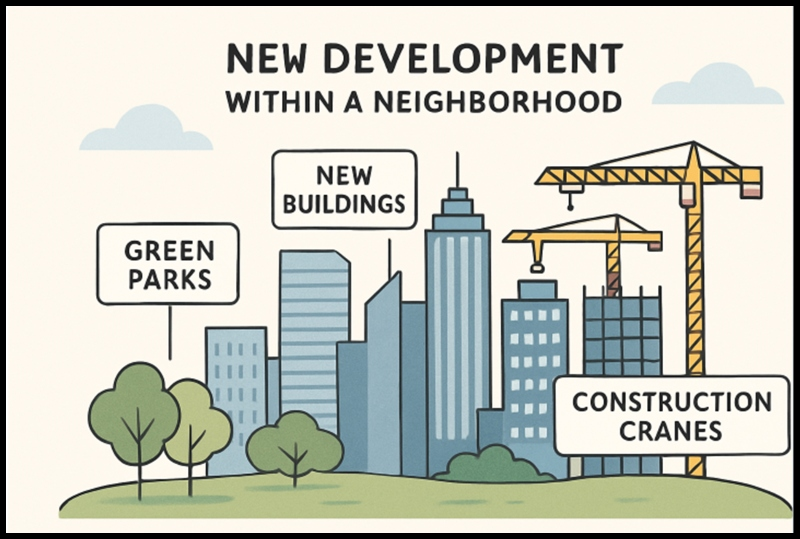
Neighborhood appeal is fundamentally shaped by the level of convenience, safety, and lifestyle amenities and infrastructure offered. New developments typically introduce upgraded roads, green parks, walkable retail districts, and improved public transit, thereby raising the area’s desirability. According to a Forbes report, locally targeted investments, such as school renovations or modern shopping centers, can send property prices soaring as both owner-occupants and investors compete for limited housing stock.
Moreover, cutting-edge residential complexes often featuring sustainable design, fitness facilities, coworking spaces, and secure access enhance quality of life, which in turn drives higher demand and price growth. The key is that even modest enhancements in daily comfort and convenience can create a ripple effect, inflating values across an entire zip code.
Market Saturation and Supply-Demand Dynamics
Healthy real estate markets depend on a balance between the number of new units entering the market and the pool of eager buyers. When too many properties are built within a short period, the influx can saturate the market, leading to stagnating or declining prices. A 2023 feature on The Wall Street Journal explored how overbuilding can cause price corrections if supply outpaces demand, especially in areas where population growth or job creation slows.
This dynamic underscores the importance of regional planning and targeted investment. Cities that monitor and adjust development based on population trends and infrastructure capacity are better positioned to sustain healthy growth rather than create artificial market peaks and troughs.
Short-Term Disruptions During Construction
Construction is inherently disruptive, frequently causing noise, dust, and limited street access. Such disturbances may discourage some homebuyers or prompt existing residents to sell, temporarily lowering property prices during the most intensive phases of construction. However, a Harvard study confirms these negative effects tend to fade within one to two years after construction concludes, and prices often rebound or surpass previous levels when the finished projects fill, streets are cleaner, and local businesses enjoy a boost from new residents.
Homeowners near upcoming projects benefit from patience and a focus on the long-term upside rather than short-term fluctuations. Most developments that meaningfully improve the area eventually yield stronger demand and appreciation.
Proximity to New Developments
The impact of a new development is often determined by its distance from surrounding properties and the quality of the work undertaken. Properties adjacent to high-end or thoughtfully designed developments, such as mixed-use complexes, luxury condos, or community-oriented spaces, are more likely to appreciate. Conversely, poorly planned projects (those that increase congestion or decrease green space) can dampen nearby property values, sometimes even leading to longer-term declines.
It’s crucial to assess not only the immediate neighborhood but also the developer’s reputation and the nature of the new addition. Long-term trends reveal that sought-after developments can transform entire corridors into some of a city’s most coveted residential destinations.
Case Studies and Real-World Examples
Las Vegas has experienced remarkable growth as new residential and mixed-use projects attract both families and professionals. Neighborhoods like Summerlin and Henderson are prime examples. While new community investments sparked growth in these areas, home prices in Summerlin are now routinely 20% higher than the broader city average, according to local data. The area draws those attracted by a blend of parks, top-rated schools, and access to shopping and entertainment, illustrating the ripple effect that well-planned development can generate within a city.
Similarly, areas in cities like Austin and Charlotte have witnessed property value booms following the completion of high-quality, mixed-use and tech-oriented projects, especially as remote work and lifestyle preferences drive broader demand. These examples reflect the importance of understanding both the local development pipeline and broader market drivers when analyzing future property price movements.
Conclusion
The influence of new developments on property prices is multifaceted, combining the benefits of amenities and infrastructure upgrades, the risks of potential overbuilding, and a balance of short-term and long-term impacts. For investors, buyers, and sellers, monitoring the quality, location, and scale of development projects provides a practical edge when navigating the shifting real estate landscape. In growing hubs and revitalized districts, a well-informed approach can yield both immediate and lasting value.