Table of Contents
- Renewable Energy Integration
- Energy-Efficient Product Design
- Sustainable Material Sourcing
- Waste Reduction and Recycling
- Supply Chain Optimization
- Collaborative Initiatives
- Technological Advancements
- Final Thoughts
As the transition to a low-carbon economy accelerates, electrical supply chains are emerging as a pivotal force in driving sustainable transformation across industries. Addressing the dual pressures of climate change and resource scarcity, more companies are embedding eco-friendly strategies into their supply chains to reduce waste, enhance efficiency, and shrink environmental footprints.
These sustainable approaches not only position electrical suppliers and manufacturers as responsible corporate citizens but also enhance competitiveness in an increasingly regulated marketplace. From renewable energy adoption to collaborative efforts with industry peers, the movement toward greener practices is revolutionizing the sector at every step. To learn more about implementing sustainable solutions in electrical supply chains, service providers offer insights and products to support greener operations.
With increased scrutiny from governments, investors, and consumers alike, the push to source materials responsibly, innovate waste management, and modernize production pipelines is more urgent than ever. This momentum is fostering a new standard of excellence throughout electrical supply chains, influencing design decisions, procurement protocols, and technology adoption strategies.
Sustainable supply chains are also key drivers in global efforts to decarbonize. With electrical supply chains stretching across continents and supply networks, their potential to create a positive impact is immense. Companies that are early adopters of resilient and environmentally responsible practices are finding additional benefits, such as cost savings and improved brand reputation, that extend beyond immediate regulatory compliance.
Renewable Energy Integration
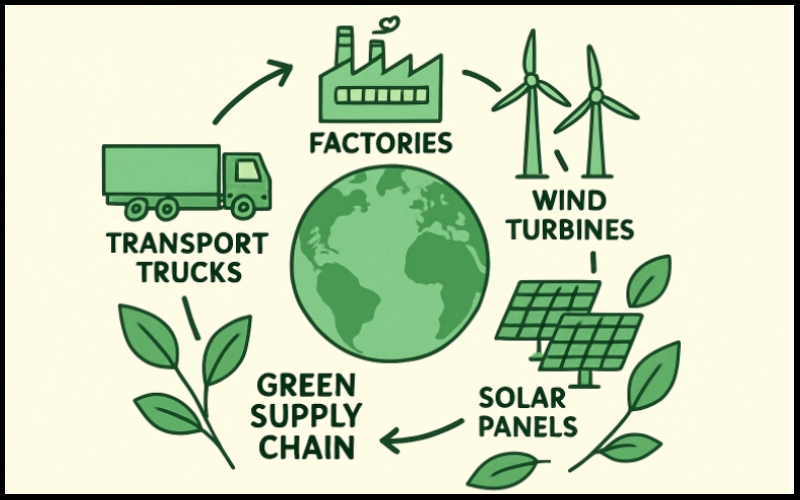
One of the most critical advancements in sustainable supply chains is the widespread adoption of renewable energy sources. Manufacturers of electrical components are increasingly powering factories and warehouses with solar panels, wind turbines, or hydroelectric systems. A leading example is Vale Indonesia’s nickel operations, which generate the bulk of their energy from hydroelectricity sourced from three local dams. Since 2017, their efforts have resulted in nearly a 20% reduction in carbon emissions from nickel production, though some facilities still rely on coal with planned transitions to liquefied natural gas as an intermediary solution.
This shift in energy sourcing does more than reduce emissions. It also aligns with international climate targets and signals to customers and partners that the company prioritizes environmental responsibility. According to the International Energy Agency, such renewable integration is expected to double globally by 2030, making it a pillar of scalable sustainability strategies.
Energy-Efficient Product Design
Innovative design is crucial to minimizing the energy consumption of electrical products from the outset. Engineers are now focused on developing advanced microchips, circuit boards, and devices that require less power without sacrificing function or longevity. This push for efficiency is supported by rigorous energy use assessments throughout the R&D process, ensuring that the final product delivers measurable savings for consumers and industrial users alike.
Additionally, implementing stricter efficiency standards, such as those adopted by regulatory bodies in Europe and North America, promises further reductions in environmental impact across the sector. Industry leaders find that these investments in product design lower lifecycle costs and often unlock eligibility for green certifications, creating a win-win scenario for business and the environment.
Sustainable Material Sourcing
The building blocks of any electrical product begin with materials. As pressure mounts to address environmental and social risks in supply chains, companies are implementing sustainable sourcing frameworks that prioritize recycled metals, conflict-free minerals, and renewable insulating materials. Participation in initiatives like “Together for Sustainability” brings transparency and accountability to raw material procurement, setting common audit standards that help the sector collectively reduce negative impacts.
These sourcing improvements extend well beyond reducing carbon footprint. By supporting responsibly managed forestry, extracting minerals with lower water and energy intensities, and prioritizing suppliers with ethical labor practices, electrical supply chains can foster both environmental and social stewardship at a global scale. Third-party certifications and blockchain-enabled traceability are also making it easier for companies to track and authenticate the source and sustainability of their supplies.
Waste Reduction and Recycling
Robust waste management protocols are at the heart of operational sustainability. Companies like S&C Electric Company have been recognized for almost eliminating landfill waste, diverting over 98% of their production byproducts into composting, recycling, and recovery streams. These zero-waste initiatives are spreading quickly, as companies realize the financial benefits of reducing disposables and the goodwill that comes from responsible stewardship.
Furthermore, closed-loop recycling programs for copper wiring, plastics, and battery components are being bolstered by new government regulations and heightened consumer awareness. According to the United Nations Environment Programme, pushing for circularity in raw materials could cut global resource extraction by over 25% by 2050.
Supply Chain Optimization
Operational efficiency in logistics, inventory management, and transportation is fundamental to minimizing the carbon footprint of electrical supply chains. Schneider Electric has demonstrated industry leadership by weaving sustainability principles throughout its procurement and distribution processes. Leveraging advanced analytics and collaborative performance metrics, they report consistent decreases in greenhouse gas emissions and enhancements in supplier relationships.
These strategies not only make supply networks leaner and greener but also more agile in adapting to global disruptions, such as those experienced during the COVID-19 pandemic. With digital technologies and data integration, supply chains become more transparent and responsive to both environmental requirements and market shifts.
Collaborative Initiatives
Collective action is accelerating the adoption of sustainability best practices across the industry. Initiatives like “Together for Sustainability” unite the chemical, electrical, and electronics sectors around a single standard, enabling rapid, shared learning and more consistent supplier assessments. Such collaborations are vital for influencing upstream suppliers, harmonizing ESG benchmarks, and pushing systemic changes beyond individual company boundaries.
This approach not only reduces redundant audits and certifications but also raises the bar for smaller suppliers, who might not otherwise have access to robust sustainability frameworks. By building a shared knowledge base, these initiatives foster a more resilient and future-ready supply chain ecosystem.
Technological Advancements
Rapid advances in technology are empowering greater transparency and efficiency in sustainability initiatives. Artificial intelligence, IoT-enabled asset tracking, and blockchain documentation are enabling real-time verification of compliance and measurement of improvements. Emerging methods like quantum-inspired optimization are already being tested to streamline complex logistics and reduce both operational costs and emissions simultaneously.
In addition to monitoring energy use, sensors and automation are helping teams predict where supply bottlenecks or resource inefficiencies are most likely to occur. These innovations are essential for scaling sustainability in an industry that is both fast-evolving and highly interconnected.
Final Thoughts
Integrating sustainable practices throughout the electrical supply chain is a competitive necessity and a moral obligation. By investing in renewable energy, developing energy-efficient products, sourcing materials sustainably, reducing waste, optimizing logistics, collaborating at the industry level, and leveraging advanced technology, companies are paving the way for a greener, more equitable future. For organizations navigating the complexities of this transition, prioritizing sustainability is the surest path to resilience, growth, and responsible leadership in the modern era.